
What Are Direct Thermal Labels? Uses, Benefits & Printing Process
March 23, 2026
You will gain complete information about direct thermal labels and…
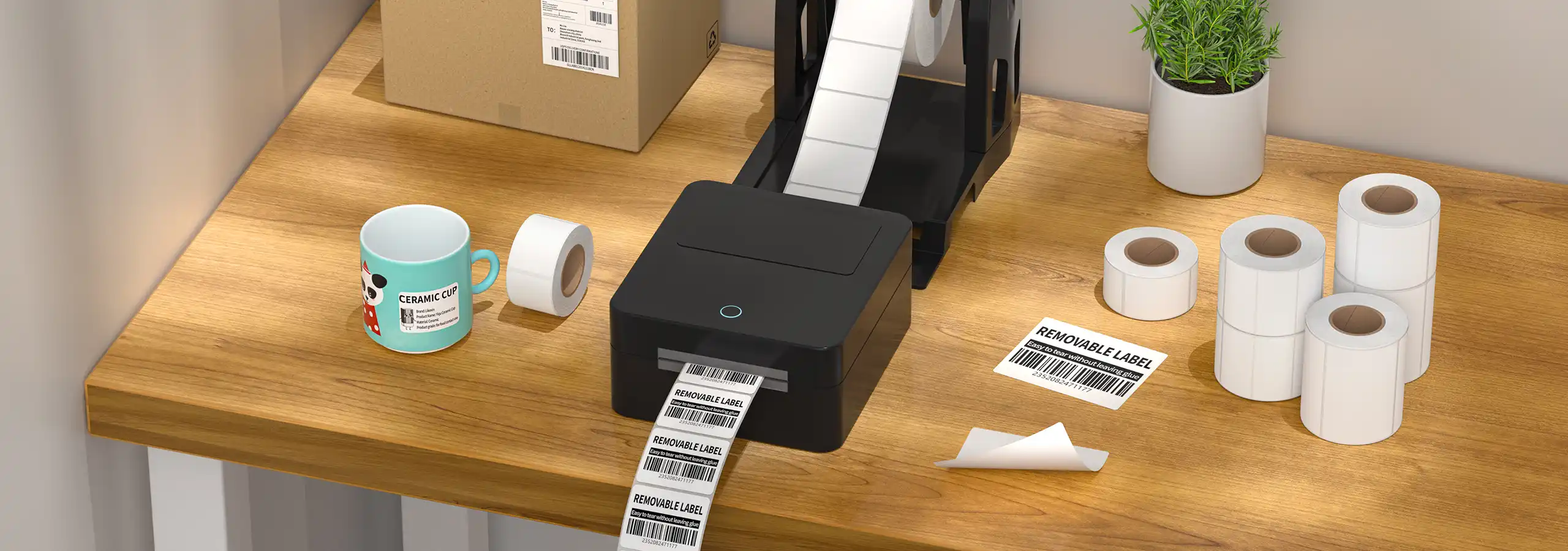
As Likexin’s partners know, we offer not only sophisticated customization services but also standard-sized thermal labels.
How are thermal label size standards determined?
Why do thermal label sizes need to be standardized?
Based on years of production experience and application feedback from global customers, Likexin has compiled this overview of commonly used thermal label sizes.
Furthermore, we will analyze from your perspective how to determine whether to choose a standard size or a custom size.
Inch | Millimeter | Common Applications |
|---|---|---|
4" x 6" | 101.6 x 152.4 | Globally accepted label standard |
4" x 4" | 101.6 x 101.6 | Pallet identification, large outer box labeling, turnover baskets |
4" x 3" | 101.6 x 76.2 | Commercial invoice stickers, packing lists, medium-sized product labels |
3" x 2" | 76.2 x 50.8 | sset numbering, file classification, medical sample labeling |
3" x 1" | 76.2 x 25.4 | Sealing stickers, takeout order details, barcode stickers |
2.25" x 1.25" | 57.1 x 31.7 | Supermarket shelf labels, medicine bottle instructions, supermarket price tags |
2" x 1" | 50.8 x 25.4 | Hang tag sub-label, SKU barcode, small electronic product label |
1.25" x 1" | 31.7 x 25.4 | Jewelry label, laboratory test tube label |
*Likexin’s standard-sized labels all meet a die-cutting precision of ±0.2mm
Thermal labels are present in every aspect of our lives.
This is precisely why using universally sized thermal labels can save a lot of costs.
For example, when you have many packages to send and need to use different logistics companies, you don’t need to check the size requirements of each logistics company for waybills.
Similarly, if you are sending to different countries, you don’t need to check the regulations for waybills in each country.
Why is this?
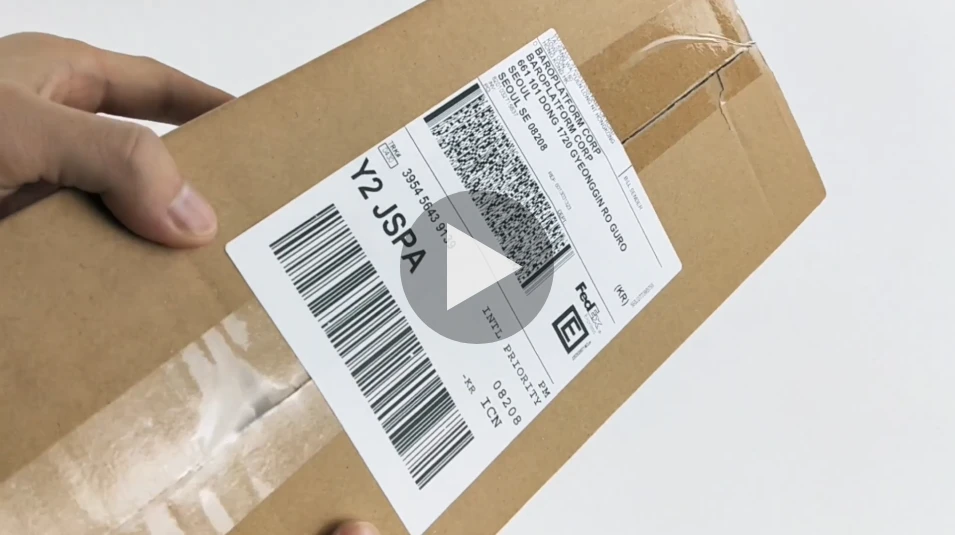
Because the 4″ x 6″ thermal label is the globally universal standard for waybills.
In scenarios with strict label requirements, such as commercial bidding and laboratories, the standard thermal label size also provides a more convenient user experience for professionals.
It’s important to understand that standard sizes weren’t chosen arbitrarily.
Many factors were considered.
International logistics agreements, the component structure of mainstream printers, and the usage scenarios for terminal scanning all had to be taken into account when setting size standards.
For example, 4″ x 6″ thermal labels are a standard jointly recognized by UPU and giants like Amazon, FedEx, and UPS.
This size ensures that necessary information such as sender and recipient information and barcodes are clearly displayed within a limited space.
Furthermore, it’s globally compatible, reducing disputes arising from international logistics.
These specifications are generally compatible with most mainstream printer brands on the market, such as Zebra.
This eliminates a significant amount of calibration work during printing.
Standard label sizes conform to usage habits and reduce the difficulty of use, making it more convenient for users and saving production costs for us manufacturers.
For customers, standard sizes are usually kept in large quantities in our warehouses.
Once an order is placed, we can ship it directly.
No need to wait for production scheduling.
For custom orders, a separate production schedule will be required, along with sample confirmation.
The production and shipping cycle will then take longer.
The entire customization process typically takes 7-15 business days.
When purchasing thermal labels, be sure to confirm compatibility with your printing equipment with our technical consultant.
And clearly explain your usage scenario.
This will allow us to accurately determine if customization is necessary.
For standard sizes or materials, we usually have ample stock and can ship directly.
However, if you require a special size, or if you need the labels for use in special environments such as cold chain logistics,
then customization will be required.
Of course, before mass production, we will confirm the size, core, material, and manufacturing process with you, and conduct sample testing.
Mass production will only begin after all processes are confirmed to be correct.
Having worked in the label industry for many years, we’ve found that many customers’ biggest headache isn’t “not being able to buy labels,” but rather “buying labels that don’t work well.”
At Likexin, we don’t want to be just a seller of thermal labels; we want to be your most professional technical consultant.
We hope that every label we deliver to you can fulfill its maximum purpose.
We want you to buy with confidence and use with peace of mind.
Click here to contact us. Likexin engineers will provide you with a free one-on-one selection solution.


Long-term use of excessively narrow labels will cause uneven pressure on the printhead. Areas of the printhead not covered by paper will directly contact dust or glue particles on the backing paper, resulting in uneven wear.
Likexin recommends selecting the most suitable width based on your printer model, or cleaning the printhead regularly to extend its lifespan.
Please use standard calipers to measure the width and height of the label itself.
Remember not to include the width of the backing paper on both sides.
Also, please measure the gap between the labels; the standard gap is usually 2mm-3mm.
This is usually caused by sensor misalignment or incorrect software size settings.
Please check if the page settings in the print driver are 101.6*152.4mm.
If the error persists, please run the printer’s automatic calibration program or contact Likexin technical support for guidance.
Generally, Likexin’s customization lead time is 7-15 business days.
The specific lead time will need to be determined based on your specific requirements.